The ongoing conflict between Iran and the United States is not just a distant geopolitical issue—it is something that directly and indirectly affects many countries around the world. Among them, Pakistan stands in a very sensitive and important position. Because of geography, politics, economy, and religion, Pakistan is deeply connected to this conflict, even if it is not directly involved in the fighting.
To understand this connection, we need to first look at what this war actually is.
What Is the Iran–America Conflict?
The Iran–America conflict is not a traditional war with full-scale invasion (at least not yet), but it includes military threats, economic sanctions, cyber warfare, and regional proxy battles.
The main reasons behind this conflict include:
- Iran’s nuclear program
- US economic sanctions on Iran
- Power struggle in the Middle East
- Support for rival groups in the region
In 2026, tensions have escalated further. Oil routes are threatened, military activity has increased, and even global markets are reacting strongly. Recently, the situation worsened after failed peace talks and actions like naval blockades in the Strait of Hormuz, which is one of the most important oil routes in the world .
Why Pakistan Is Directly Connected
Now let’s talk about Pakistan.
Pakistan is not just watching this conflict from far away—it is geographically, economically, and politically linked to both Iran and the United States.
1. Geography: Pakistan Shares a Border with Iran
Pakistan shares a long border with Iran. This makes the situation very serious.
If the conflict turns into a full-scale war:
- Refugees could enter Pakistan
- Border security issues may increase
- Militancy and instability could spread
When a neighboring country is unstable, it automatically affects your own country. Pakistan has already experienced such effects in the past with Afghanistan.
2. Economic Impact: Oil Prices Hit Pakistan Hard
Pakistan is highly dependent on imported oil. And most of that oil comes through the Middle East.
When conflict increases:
- Oil prices rise globally
- Fuel becomes expensive in Pakistan
- Inflation increases
Recently, oil prices have already crossed $100 per barrel due to tensions and blockades .
For Pakistan, this is dangerous.
Higher oil prices mean:
- Expensive petrol and electricity
- Higher transport costs
- Increased cost of living
Pakistan’s economy is already fragile, so any global shock—especially oil—is a big problem. Analysts describe Pakistan as a “high-beta” country, meaning it reacts strongly to global instability .
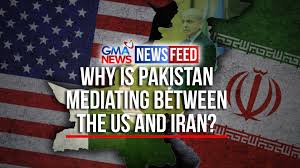
3. Diplomatic Role: Pakistan as a Mediator
One of the most interesting roles Pakistan is playing is that of a mediator.
Pakistan has good relations with:
- Iran
- United States
- Saudi Arabia
- China
Because of this, Pakistan has tried to host peace talks and reduce tensions. In fact, recent negotiations between Iran and the US were even held in Islamabad .
This shows Pakistan is not just affected—it is actively involved diplomatically.
However, this role is risky.
If Pakistan leans too much toward one side:
- It can damage relations with the other
- It can create internal political pressure
So Pakistan must stay balanced.
4. Strategic Pressure: Choosing Sides Is Difficult
Pakistan is in a very tricky position.
On one side:
- Iran is a neighboring Muslim country
On the other side:
- The United States is a global superpower
- Pakistan has economic and military ties with the US
Also:
- Pakistan has strong relations with Saudi Arabia, which often opposes Iran
So if the conflict escalates, Pakistan may face pressure to choose a side, which can create serious problems.
5. Security Risks Inside Pakistan
Whenever there is instability in the region, internal security becomes a concern.
Possible risks include:
- Sectarian tensions (Sunni vs Shia issues)
- Extremist group activity
- Border conflicts
Pakistan already deals with internal security challenges. A regional war can make things worse.
6. Trade and Regional Projects
Pakistan is also connected to Iran through:
- Border trade
- Energy projects like gas pipelines
If the conflict continues:
- Trade routes may be disrupted
- Development projects may stop
- Economic cooperation may suffer
This slows down Pakistan’s growth and regional connectivity plans.
7. Global Economic Effects
The Iran–America conflict is not just regional—it affects the whole world.
According to recent reports:
- Global growth is slowing
- Inflation is rising
- Markets are unstable
When global economies suffer, Pakistan suffers more because it depends on:
- Imports
- Foreign loans
- International trade
So even indirect effects hit Pakistan strongly.
Pakistan’s Current Strategy
Right now, Pakistan is trying to:
- Stay neutral
- Promote peace
- Avoid military involvement
- Maintain relations with all sides
This is a smart but difficult strategy.
Pakistan understands that war in the region will only bring:
- Economic crisis
- Security threats
- Political instability
So its focus is diplomacy, not confrontation.
Conclusion
The Iran–America conflict may seem like a distant international issue, but for Pakistan, it is very close to home.
Pakistan is connected in multiple ways:
- Geographically (shared border with Iran)
- Economically (oil dependency)
- Politically (relations with both sides)
- Strategically (regional stability concerns)
Any escalation in this conflict can directly affect Pakistan’s economy, security, and foreign policy.
In simple words, Pakistan is standing in the middle of a storm. It is not part of the fight, but it can feel every wave.
The best path forward for Pakistan is to continue playing a peaceful mediator role, avoid taking sides, and focus on internal stability.
Because in situations like this, staying neutral is not just a choice—it is a necessity.